Choosing a payment partner is rarely a one-time decision. Commercial terms change, new markets require new local providers, and reliability sometimes calls for redundancy. The problem is that many payment setups make switching or adding partners difficult – turning what should be a business decision into a technical project. This is where the structure of your payment connectivity matters as much as the partners themselves.
How Lock-In Happens
Vendor lock-in in payments usually isn't the result of a contract clause – it's a byproduct of technical integration. When a merchant builds a direct, custom integration with a single acquiring bank or PSP, that integration becomes deeply embedded in the business's systems. Switching providers, or simply adding a second one, means repeating a similar integration effort: new documentation, new testing, new edge cases.
Over time, this makes it operationally expensive to change payment partners – even when there's a good commercial or strategic reason to do so. The technical cost of switching ends up outweighing the benefit, and businesses stay with a provider not because it's still the best fit, but because moving is too disruptive.
Decoupling Partner Choice From Integration Effort
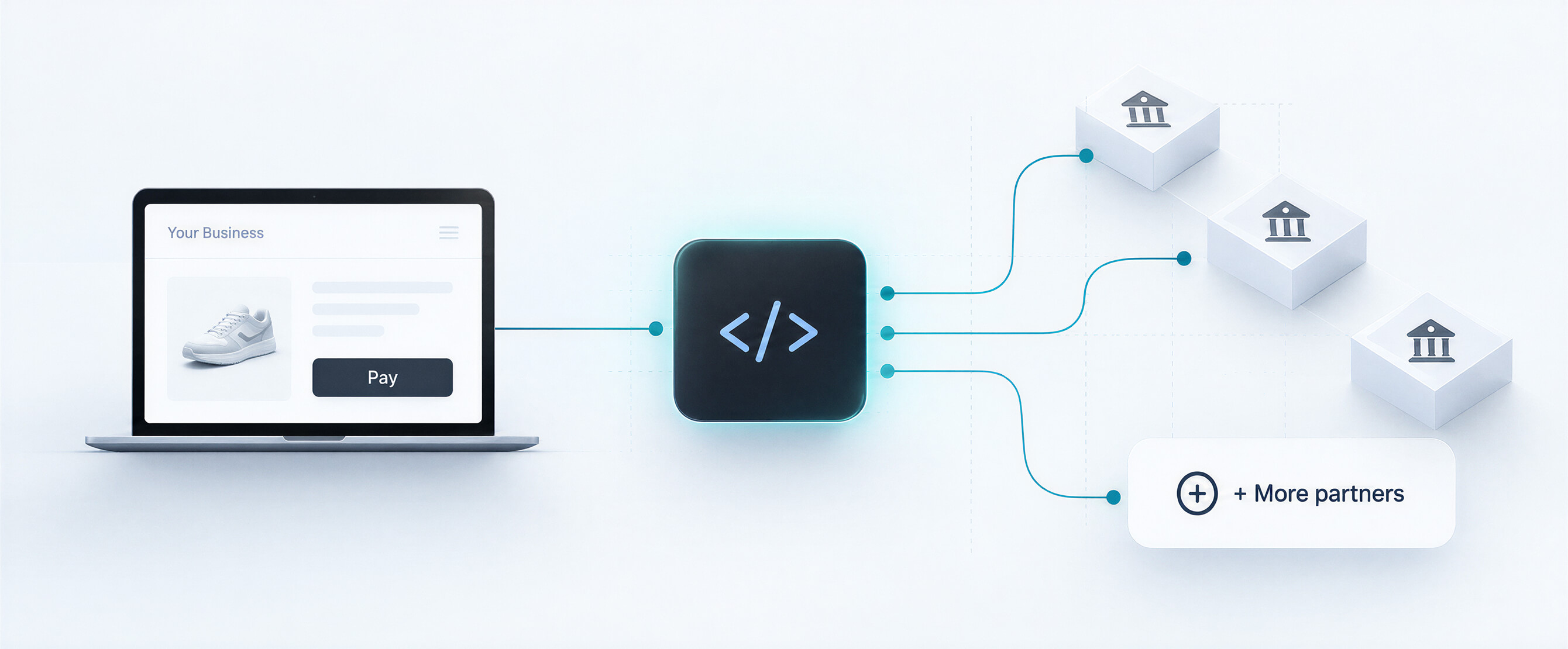
A centralized orchestration layer addresses this by separating the technical integration from the choice of payment partner. A merchant integrates once with the orchestration platform; the acquiring banks and PSPs connected behind that platform become configurable rather than hard-coded into the business's systems.
In practice, this means:
- Adding a new acquiring bank or PSP is a configuration change, not a new integration
- Adjusting the mix of providers – for cost, coverage, or redundancy – doesn't require rebuilding existing systems
- Testing and validating a new partner can happen without disrupting the technical setup already in place
What Flexibility Actually Enables
The value of avoiding lock-in isn't flexibility for its own sake – it's the ability to make payment partner decisions based on what's actually best for the business at a given time, rather than what's easiest to avoid re-integrating. That could mean adding a second acquiring bank for redundancy, switching PSPs in a specific market for better approval rates, or renegotiating terms with the leverage of knowing a switch is technically feasible.
The Underlying Principle
Payment connectivity should be structured so that changing or adding a partner is a business decision, not an engineering constraint. A centralized, single-integration approach to orchestration is largely about making that true – keeping the technical layer stable while leaving the choice of who processes and settles your payments genuinely open.